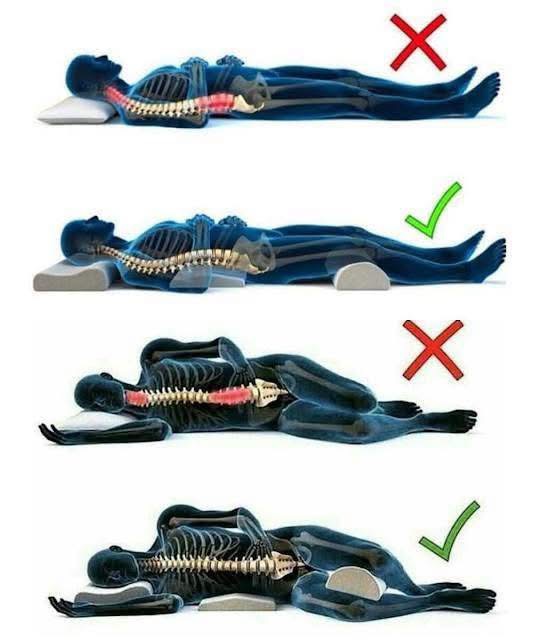
Waking up with a stiff neck, aching hips, or lower back pain despite sleeping for seven or eight hours may indicate that your sleeping posture needs improvement. The position of your body and the support it receives can influence your comfort throughout the night.
Although sleeping in an uncomfortable position does not automatically cause spinal damage, remaining in a posture that strains muscles or twists joints for several hours may aggravate existing discomfort and interfere with restful sleep.
Sleeping flat on your back without support beneath your knees can increase lower back tension in some individuals. Keeping the legs completely straight may make the natural curve of the lumbar spine feel more pronounced.
Placing a small pillow underneath both knees can help maintain a slight bend in the legs, allowing the lower back muscles to relax. The pillow should provide comfortable support without excessively elevating the legs or creating additional pressure.
Side sleeping can also contribute to discomfort when the upper leg falls forward, causing the pelvis to rotate and potentially twisting the lower spine. This may result in morning stiffness, hip discomfort, or lower back pain.
A pillow placed between the knees can help maintain better alignment between the hips, pelvis, and spine. This simple adjustment may reduce unnecessary muscle tension and improve overall sleeping comfort.
Choosing a supportive mattress and an appropriately sized head pillow is equally important. Some people may also benefit from placing a small rolled towel beneath their lower back, provided it does not exaggerate the spine’s natural curve.
Ultimately, there is no universally perfect sleeping position. The goal is to maintain comfortable, natural body alignment without unnecessary pressure or twisting. Small adjustments can make a meaningful difference, but persistent or worsening back and neck pain should be evaluated by a healthcare professional.