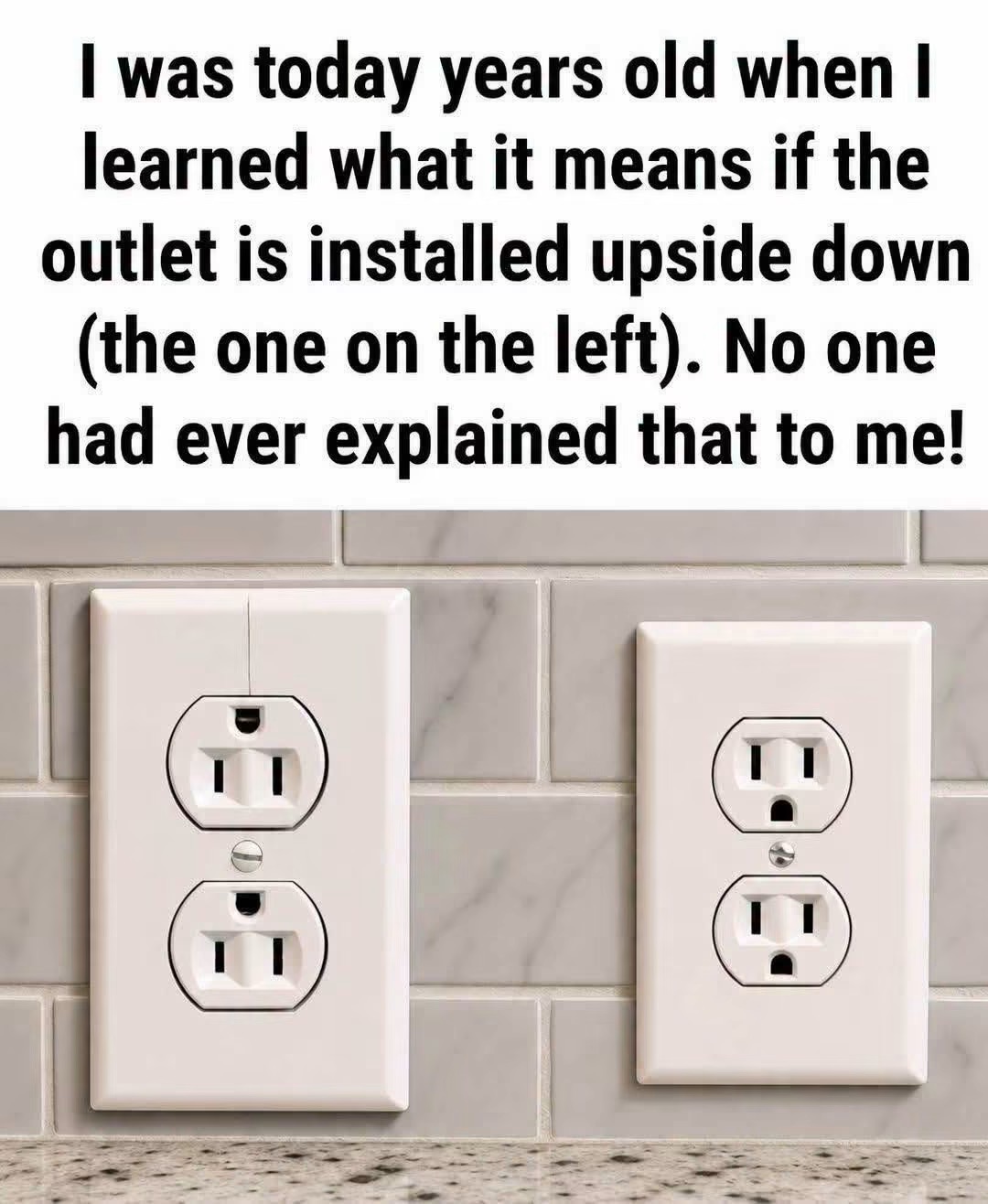
That strange, upside-down outlet on your wall might not be a mistake. It could be a silent signal about how your home was wired, and why your lights behave the way they do. In many bedrooms and living rooms, a flipped receptacle is the only clue that a wall switch controls the power.
In many homes without original ceiling lights, builders used a switched outlet as the main room light source: plug in a lamp, flip the wall switch, and the room illuminates. To make that easy to spot, some electricians flip the receptacle so the ground hole is at the top, using orientation as a visual cue. Often, only one half of that outlet is switched, while the other half stays permanently powered for clocks, chargers, or routers.
But there is no national electrical code that requires upside-down outlets for switched receptacles, and orientation alone never guarantees anything. A flipped outlet might be switched, might be a safety preference, or might just reflect a previous owner’s taste. The only reliable way to know is to test it with a lamp and the nearby switches. Once you identify which outlets are switch-controlled, you can use them intentionally—and stop mistaking a perfectly good, “dead” outlet for a broken one.
In many houses, the upper and lower halves of one receptacle can operate differently. An electrician removes the small connecting tab on the hot side, allowing one socket to receive constant power while the other is controlled by a wall switch. A lamp can then be turned on at the doorway while a clock or charger remains powered from the other half.
Turning the receptacle upside down is sometimes used as an informal marker for that arrangement. It helps homeowners, inspectors, or electricians recognize that the outlet may be special. However, the practice is a convention rather than a universal rule. Another installer may use the same orientation for a completely different reason or no reason at all.
Some electricians prefer the ground opening at the top because they believe it may reduce the chance of a falling metal object contacting the hot and neutral blades of a partly inserted plug. Others prefer the familiar ground-down orientation because most molded plugs and household habits assume it. Local requirements, institutional standards, and personal practice can all influence the final position.
The safest way to investigate is simple. Plug in a working lamp, switch it on, and test nearby wall switches one at a time. Check both halves of the receptacle. If the behavior is inconsistent, the outlet is loose, there is discoloration, or the cover feels warm, stop using it and ask a qualified electrician to inspect the circuit.
An upside-down outlet is therefore a clue, not a diagnosis. It may identify a switched lamp circuit, a safety preference, or an earlier renovation. Understanding the wiring depends on testing and, when necessary, professional inspection. The small visual difference becomes useful once it prompts the right question: what function did the installer intend this receptacle to serve?