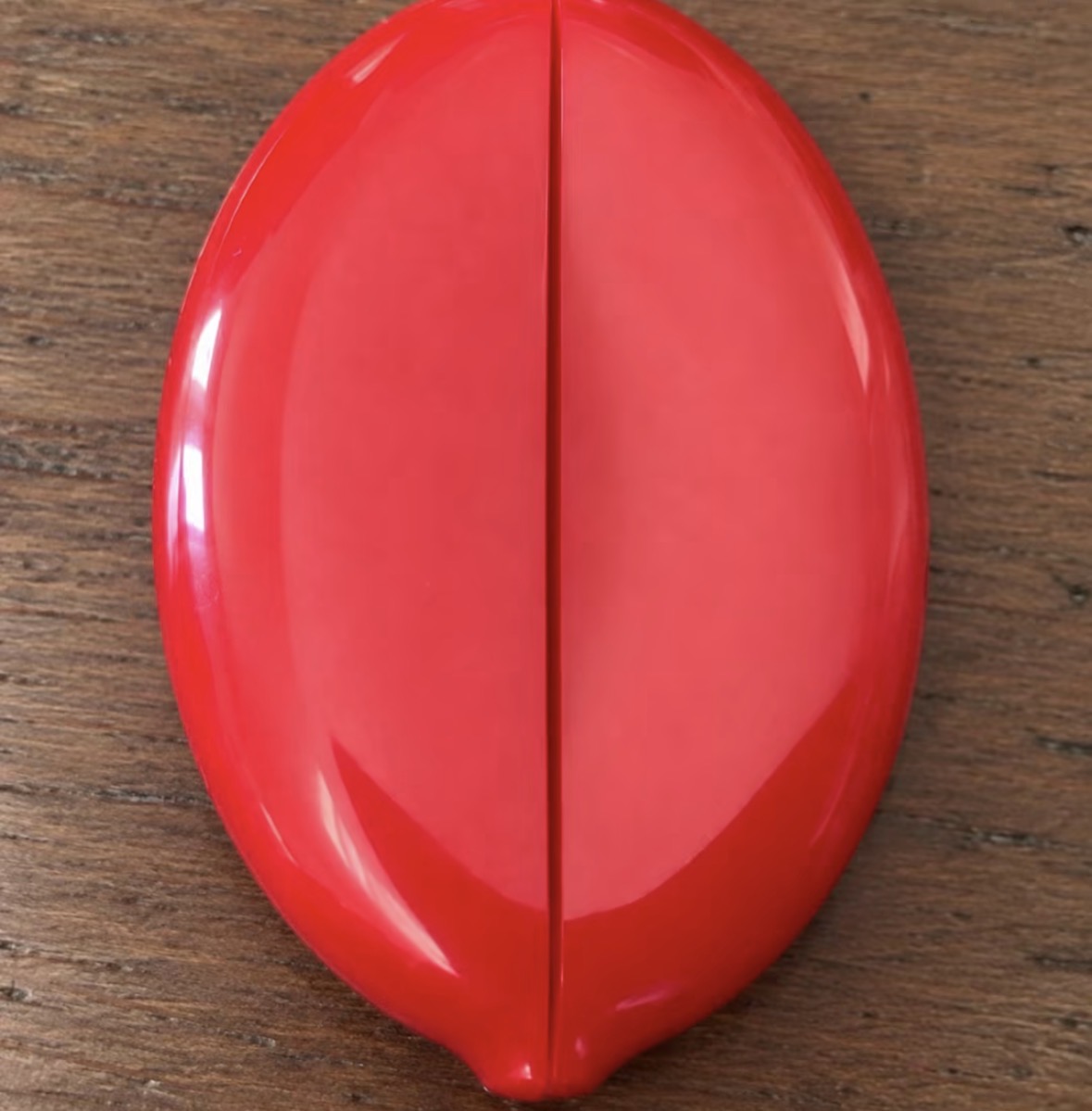
At first glance, the small bright-red oval sitting in your hand could easily be mistaken for an old makeup case, an earbud holder, or even a vintage fidget toy. Its smooth rubber body has no obvious zipper, button, snap, or clasp, leaving one simple question: how did it open? For decades, this little object was a familiar sight in purses, pockets, glove compartments, and desk drawers across North America and Europe. From the 1950s through the 1980s, people relied on coins for everything from public telephones and bus fares to parking meters, vending machines, and laundromats. What looked almost too simple to be useful was actually designed around an ingenious little trick.
The secret was a narrow slit running through the center of the flexible rubber or vinyl body. Squeezing both ends caused the sides to bow outward, widening the opening enough to grab coins or other small items. The moment the pressure was released, the material returned to its original shape and the slit closed again, effectively sealing itself without any complicated mechanism. Businesses quickly realized the value of the design, too, and banks, gas stations, insurance companies, hardware stores, and other local businesses often handed them out as inexpensive promotional gifts featuring names, logos, addresses, and phone numbers. But there was another reason these humble little purses became so memorable—and it had nothing to do with advertising.
The design was practical because it solved an everyday problem with almost no moving parts. A person could reach for a few coins quickly, squeeze the ends with one hand, and let the purse close again without dealing with a zipper or tiny metal clasp. Unlike many modern gadgets that depend on batteries, electronics, or delicate components, the squeeze purse depended almost entirely on the flexibility of its material. Today, even though credit cards and digital payments have dramatically reduced the need for loose change, the same idea can still be useful for storing tokens, guitar picks, keys, small hardware, earbuds, short cables, or other easily misplaced objects. Vintage examples with colorful advertising and unusual graphics can also attract collectors interested in everyday pieces of American history.
What makes these little purses especially charming is how they reflect a time when ordinary products were often designed to be straightforward, durable, and surprisingly clever. The object once carried spare change for a phone call or a trip to the laundromat, sometimes while quietly promoting a neighborhood bank or insurance business. Now, decades later, its bright colors and unusual opening mechanism can trigger memories of an era when a handful of coins could get you through much of the day. Known as a Quikey or Oval Squeeze Purse, the classic rubber squeeze coin purse may look like a mystery at first—but once you know how it works, its simple design becomes the most fascinating thing about it.