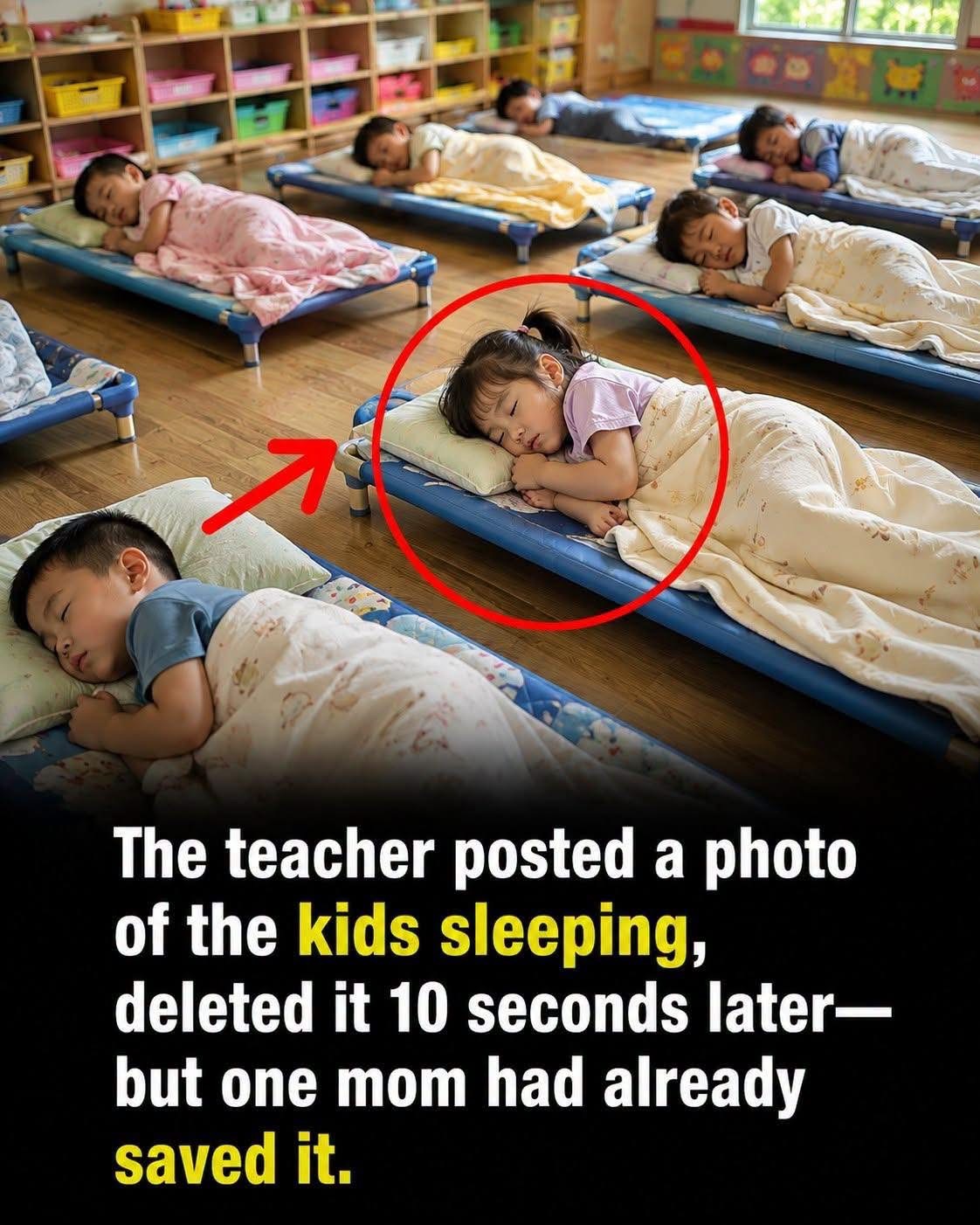
A teacher shared a photograph of children sleeping during classroom nap time and deleted it seconds later. One parent had already saved the image. What may have begun as a reassuring glimpse of a peaceful school day became a lesson in how quickly a child’s image can leave its intended setting.
The teacher may have wanted parents to see that the children were comfortable and cared for. The intention does not remove the need for consent and school policy. A classroom photograph can include faces, names on walls, artwork, uniforms, location clues, medical equipment, or other details that identify children. Families may have different reasons for refusing public images, including safety concerns that staff do not know.
Deleting a post does not guarantee that it disappears. Screenshots, automatic backups, notifications, cached pages, and message previews can preserve content almost instantly. A parent who saves an image may keep it privately, forward it to a group, or repost it. Each copy creates another point where control can be lost.
Schools need clear rules that distinguish documentation for internal purposes from publication on public or personal accounts. Consent forms should explain where images may appear, who can access them, and whether permission can be withdrawn. A general signature at enrollment may not be enough if families do not understand that classroom moments could be shared on social media.
Teachers also need training and practical tools. Telling staff to use good judgment leaves too much uncertainty. Approved devices, secure platforms, review procedures, and separate professional accounts can reduce accidental disclosure. Some schools photograph only hands or activities, blur faces, or use images of displays rather than children. The right policy depends on the context, but it should be deliberate.
The parent who saved the photo also carries responsibility. Concern about a privacy breach should be reported to the school rather than addressed by spreading the image as proof. Reposting can increase the very harm the complaint seeks to prevent. When possible, the saved copy should be shared only through a secure channel with administrators and then deleted after the issue is documented.
Metadata and background details deserve attention. A file may contain time or location information, while a visible schedule or name tag can reveal more than the photographer intended. Before any school image is published, staff should review the entire frame and remove information that identifies a child or routine unnecessarily.
Parents deserve a prompt, honest response when a mistake occurs. The school should identify where the image was posted, how long it remained visible, who may have accessed it, what steps were taken, and how recurrence will be prevented. A vague assurance can deepen mistrust. Accountability is stronger when it includes specific action.
Children cannot fully understand or negotiate the long-term effects of a digital footprint. Adults therefore have a higher duty to pause before sharing. A sleeping child may look harmless and sweet, but vulnerability is exactly why protection matters. The lesson is not that teachers should never document classroom life. It is that a child’s privacy must be considered before the camera is raised, because seconds are enough for an image to become permanent.
The incident can become a constructive review rather than only a disciplinary event. Schools can audit old accounts, remove unnecessary archives, update consent records, and practice a response to accidental posting. Families can learn whom to contact and how complaints are documented. A stronger system protects teachers from unclear expectations while giving parents confidence that mistakes will be handled quickly, honestly, and without spreading the child’s image further.
Most importantly, the child should not be blamed or questioned as though being photographed created the problem. Responsibility remains with the adults and systems that controlled the image.