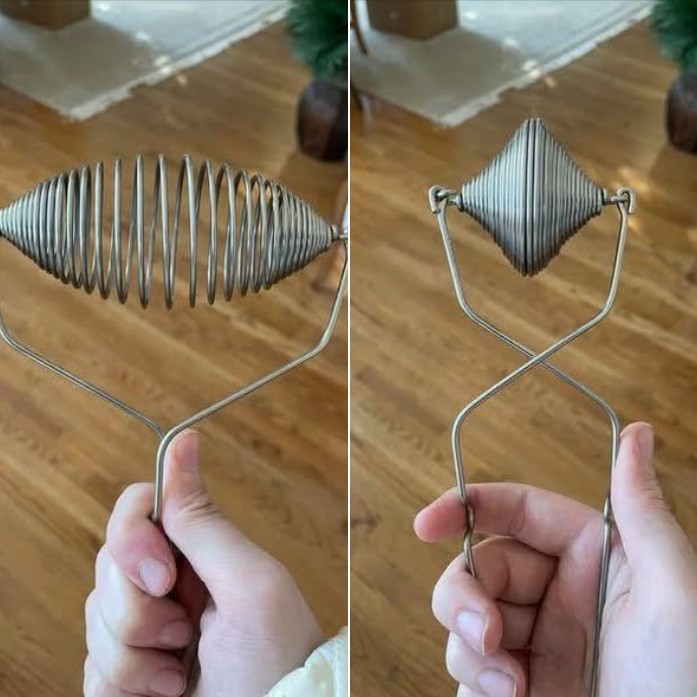
Tucked away in drawers alongside worn wooden spoons, the flour wand is a quiet reminder of a time when baking was part of everyday life, not just a weekend hobby. Its simple springy coil wasn’t designed to look fancy, but to work efficiently—sifting flour, breaking clumps, and folding wet and dry ingredients together gently, without overmixing.
In kitchens before stand mixers and electric blenders, this humble tool made it possible to create bread, pies, cookies, and cakes using only your hands and a good recipe. Modern kitchens have shifted to electric mixers, silicone spatulas, and balloon whisks, making the flour wand seem almost obsolete. Yet it offered a kind of precision that’s easy to forget.
Its gentle touch can make a noticeable difference in pastries, cakes, and doughs that need careful folding. Even if you don’t use it daily, displaying the flour wand in your kitchen is a small way to honor a tradition of patience, skill, and simplicity. This unassuming piece of metal wire carries more than flour—it carries history, care, and the quiet art of baking the old-fashioned way.