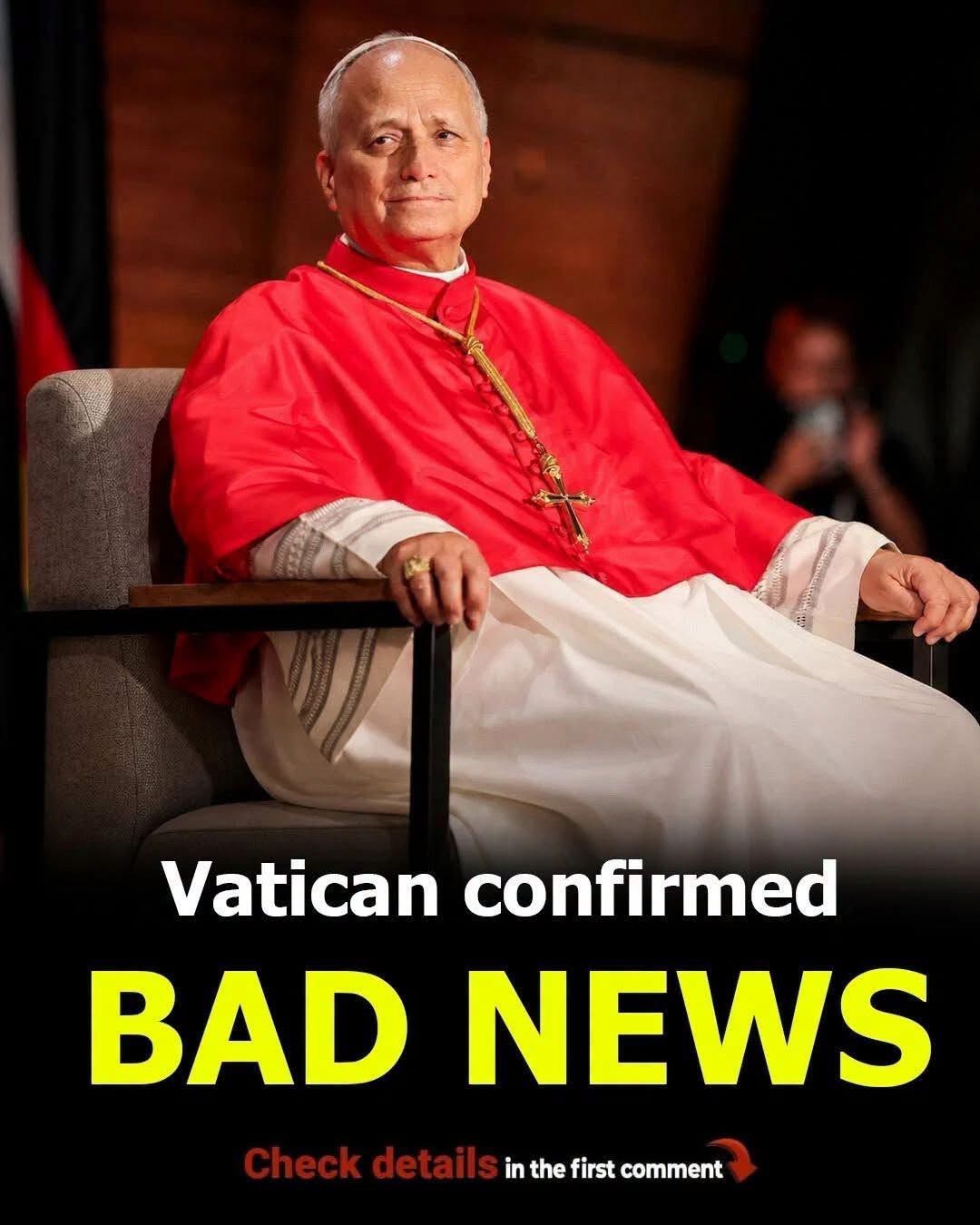
VATICAN CITY, October 22, 2026 — A serious medical diagnosis involving Pope Leo XIV has drawn international attention after Vatican officials confirmed that the 71-year-old leader of the Roman Catholic Church underwent surgery in Rome to remove a cancerous growth from his right lung.
The diagnosis, identified as lung adenocarcinoma, was confirmed during an operation at the Agostino Gemelli University Hospital on October 13, 2026. Surgeons removed the lower lobe of the pontiff’s right lung in a procedure designed to eliminate the localized tumor.
The Pope spent approximately three hours in the operating room, although the surgical procedure itself lasted around 90 minutes. Doctors subsequently confirmed that the operation had been completed successfully without complications.
For Catholics around the world, the announcement raised immediate concerns about the health of a spiritual leader whose responsibilities extend far beyond Vatican City.
The Pope is not simply a ceremonial figure. He oversees the spiritual direction of a global religious community, receives world leaders, participates in international diplomacy, presides over major religious celebrations, and maintains a schedule that can be physically demanding even for someone considerably younger.
A serious illness affecting the Bishop of Rome therefore carries both personal and institutional significance.
Yet the medical updates released in the days following the operation have provided considerable reassurance.
Pope Leo XIV was discharged from the hospital on October 17, returning to his Vatican residence to continue recovering. He subsequently appeared publicly, thanked those who had prayed for him, and began gradually resuming his responsibilities.
Then came another important development.
On October 21, Vatican officials reported that the final post-operative examinations had confirmed that the cancer was localized and had not spread. Following an oncology assessment, doctors concluded that no additional cancer treatment was necessary at that time.
The announcement represented an encouraging turning point in a medical episode that had initially created uncertainty about the pontiff’s immediate future.
Although recovery from major lung surgery requires time, the latest findings suggested that the cancer had been identified early enough for surgery to provide the necessary treatment.
For the Pope, the experience has also become an opportunity to reflect publicly on illness, vulnerability, gratitude, and the importance of solidarity with people facing serious medical challenges.
A Routine Medical Examination Led to an Unexpected Discovery
The events leading to Pope Leo XIV’s operation began not with a dramatic medical emergency, but with an unexpected finding during routine examinations.
According to information subsequently provided by his medical team, doctors discovered a small abnormality near the lower portion of his lung while conducting tests for another purpose.
The discovery was particularly significant because the Pope had reportedly not been experiencing symptoms that would ordinarily suggest a serious lung problem.
This distinction matters.
Lung cancer is often associated with persistent coughing, chest discomfort, difficulty breathing, unexplained weight loss, or fatigue. However, some people with early-stage lung cancer experience few noticeable symptoms or none at all.
In certain cases, a suspicious lung nodule is discovered incidentally when medical imaging is performed for an unrelated reason.
That appears to have been the situation in Pope Leo XIV’s case.
His surgeon, Professor Stefano Margaritora, later explained that the abnormality became visible during routine abdominal examinations because imaging of the abdomen can also capture the lower portions of the lungs.
Had the suspicious spot been positioned slightly higher, it might not have appeared during the same examination.
The incidental discovery illustrates an important reality of modern medicine: serious conditions can sometimes be detected before they produce obvious warning signs.
Nevertheless, an unexpected lung nodule does not automatically mean cancer.
Small pulmonary nodules can develop for many reasons, including previous infections, inflammation, benign growths, or scar tissue.
Doctors generally consider several factors when evaluating them, including their appearance, dimensions, location, growth pattern, and the patient’s overall medical history.
Additional imaging and diagnostic assessments may help determine whether a particular nodule requires observation, further investigation, or removal.
In the Pope’s case, the medical findings raised sufficient concern that specialists recommended surgical intervention.
The final diagnosis would be established through examination of the affected tissue.
For a man carrying the responsibilities of the papacy, this discovery introduced an unexpected challenge into an already demanding period of leadership.
It also placed him in a situation familiar to countless patients and families around the world: facing a potentially serious medical finding while awaiting more definitive answers.
The Pope Personally Announced His Upcoming Surgery
One of the most notable aspects of this medical episode was the Pope’s decision to publicly acknowledge his condition before undergoing surgery.
On Sunday, October 11, during his traditional Angelus appearance, Pope Leo XIV told those gathered that doctors had discovered a small, localized nodule in his lung.
He explained that the abnormality had been identified at an early stage and that medical specialists believed surgery was the appropriate course of action.
Rather than allowing speculation to dominate the conversation, the pontiff chose to disclose the essential medical information himself.
He also thanked the faithful for their concern and requested their prayers.
The announcement was significant because the health of popes has historically been surrounded by varying degrees of institutional privacy.
Public information about a pontiff’s physical condition can affect church administration, diplomatic scheduling, international travel, and broader discussions about the continuity of leadership.
Consequently, Vatican communications concerning papal health are frequently scrutinized.
Leo XIV’s decision to speak directly about the forthcoming operation offered an unusually personal glimpse into a medical situation that could otherwise have remained largely private until after surgery.
His statement also conveyed an important distinction between discovering a suspicious lesion and determining its precise nature.
At that point, the Pope discussed the localized nodule and his doctors’ recommendation to remove it.
The diagnosis of adenocarcinoma was confirmed during the subsequent medical procedure.
His willingness to discuss the surgery before entering the hospital helped establish a clearer public timeline.
It also encouraged a response centered on prayer, concern, and respect for the medical process rather than speculation about an undisclosed emergency.
Inside the Three-Hour Surgical Procedure
On October 13, Pope Leo XIV was admitted to Rome’s Agostino Gemelli University Hospital for the planned operation.
The hospital has a long history of treating senior Vatican figures and possesses specialist facilities for complex medical procedures.
The operation was performed by a thoracic surgery team led by Professor Stefano Margaritora.
According to the medical information released afterward, surgeons removed the lower lobe of the Pope’s right lung using a video-assisted surgical technique.
This type of procedure is commonly described as a lobectomy.
A lobectomy involves removing one of the sections, or lobes, that make up the lungs.
The right lung normally has three lobes, while the left lung has two.
Removing a lobe may be recommended when a cancerous tumor is confined to a particular region and the surgical team determines that resection offers an appropriate treatment approach.
In the Pope’s case, doctors removed the entire lower right lobe rather than attempting to remove only the visible nodule.
The decision was intended to achieve a sufficiently complete removal of the affected tissue.
Video-assisted thoracic surgery allows surgeons to operate through smaller incisions using specialized instruments and a camera.
Compared with some traditional open surgical approaches, minimally invasive methods may offer benefits for selected patients, including reduced surgical trauma and improved recovery experiences.
However, even when performed using modern techniques, the removal of a lung lobe remains a major operation.
Patients require anesthesia, close monitoring, careful management of breathing, and post-operative assessment for potential complications.
The total time spent in the operating room also includes preparation, anesthesia-related procedures, and other aspects of surgical care.
This helps explain why the Pope remained in the operating room for approximately three hours while the operation itself lasted about 90 minutes.
Following the procedure, Vatican officials reported that the surgery had been successful and that no complications had occurred.
The pontiff awakened normally and was transferred back to his hospital room after an initial period of observation.
Doctors continued monitoring his breathing, vital signs, and overall recovery.
The successful completion of surgery was an important first milestone, but it was not the end of the medical assessment.
The removed tissue still needed detailed examination to establish the full characteristics of the disease and determine whether any additional treatment would be recommended.
Doctors Confirmed Lung Adenocarcinoma
During surgery, medical specialists examined tissue from the affected area and confirmed that the suspicious lesion was lung adenocarcinoma.
The diagnosis was consistent with concerns raised during examinations conducted before the operation.
Adenocarcinoma is a type of cancer that develops from glandular cells or cells with gland-like characteristics.
When it develops in the lungs, it is classified as a form of non-small cell lung cancer.
Non-small cell lung cancers account for the majority of lung cancer diagnoses, and adenocarcinoma is one of the most frequently identified subtypes.
The disease can occur in different regions of the lung and affects people with a range of medical and environmental histories.
Although tobacco exposure is an important risk factor for lung cancer generally, adenocarcinoma can also occur in people who have never smoked.
Other factors that researchers have associated with lung cancer risk include exposure to secondhand smoke, radon, certain occupational substances, air pollution, and inherited susceptibility.
Importantly, none of these general risk factors should be interpreted as an explanation for Pope Leo XIV’s individual diagnosis.
Vatican medical announcements have not established a specific cause of his cancer.
It would therefore be inappropriate to assign responsibility to any particular habit, exposure, or medical history without evidence.
Understanding the disease also requires recognizing that the word cancer describes an enormous range of medical conditions.
Two people with the same general cancer subtype may have very different clinical circumstances depending on the tumor’s location, size, biological characteristics, and whether it has spread.
The presence of adenocarcinoma does not, by itself, establish the patient’s prognosis.
Doctors must consider the full results of imaging, surgery, tissue analysis, and other relevant examinations.
This is why the follow-up testing performed after the Pope’s operation was so important.
It helped determine whether the cancer had remained confined to the original area or whether further medical treatment might be required.
Why Early Detection Can Make an Important Difference
The discovery of Pope Leo XIV’s tumor at an apparently early stage is one of the most significant features of the case.
Cancer treatment becomes more complex when malignant cells spread beyond the original tumor.
For lung cancer, physicians consider whether the disease has reached nearby lymph nodes or more distant organs.
When a tumor is small and localized, complete surgical removal may offer a strong possibility of successful treatment.
In some patients, surgery alone is sufficient.
Other patients may need additional therapies depending on the results of pathological examination and the characteristics of the tumor.
The Pope’s doctors initially reserved judgment about whether further treatment would be necessary.
That uncertainty was medically appropriate.
An operation can remove the visible tumor, but microscopic examination of the removed tissue provides additional information that imaging alone cannot always establish.
Pathologists may examine the cancer’s boundaries, nearby tissues, and lymph nodes where relevant.
Specialists also consider whether there are features that suggest a greater risk of recurrence.
These findings help guide decisions about chemotherapy, radiation treatment, targeted therapies, immunotherapy, or continued observation.
The details vary substantially from one patient to another.
Following the Pope’s surgery, doctors completed the necessary assessments and reached a reassuring conclusion.
The final reports confirmed that the disease was localized, without evidence that it had spread.
An oncology evaluation subsequently determined that additional cancer treatment was not required at that time.
This was an important update because the original announcement left the possibility of further treatment open.
It also demonstrates why health reports should distinguish between an initial diagnosis and the medical conclusions reached after complete testing.
The term early detection should not be understood as a guarantee that every patient will experience the same outcome.
Nevertheless, identifying a treatable cancer before it spreads can substantially influence the options available to doctors.
The Pope’s case illustrates the value of careful medical assessment, while also reminding readers that decisions about screening and diagnostic testing must be individualized.
The First Days After Surgery
The days immediately following a lobectomy are especially important for monitoring respiratory recovery.
A patient’s body must adapt to the loss of the removed lung tissue while the remaining portions of the lungs continue functioning.
Doctors monitor oxygen levels, breathing patterns, blood pressure, heart activity, and signs of infection or other complications.
Pain management is also essential because discomfort around the chest can make deep breathing and movement more difficult.
Patients are often encouraged to begin carefully supervised movement and respiratory exercises as soon as their medical condition permits.
These activities can help support lung expansion, circulation, and physical recovery.
For Pope Leo XIV, the initial medical updates were encouraging.
Vatican officials reported that he had recovered from anesthesia normally and was resting in his hospital room.
He was able to eat and interact with those around him.
By the following days, medical staff reported that he was walking, participating in respiratory therapy, and gradually resuming ordinary activities.
A chest X-ray performed during the recovery period showed satisfactory progress in the operated lung.
Routine medical examinations also produced results consistent with an uncomplicated recovery.
On October 15, doctors described his overall postoperative progress as normal.
Such updates were important because the absence of complications immediately after surgery does not mean that recovery is complete.
The first several days still require attention to respiratory function, mobility, wound healing, and general physical strength.
A patient may feel considerably better while still needing time to recover from the physiological effects of major surgery.
The Pope’s medical team therefore continued evaluating him before deciding when he could safely leave the hospital.
The fact that he was able to walk independently and participate in rehabilitation activities was reassuring.
It suggested that he was making the expected early progress after the operation.
However, the broader recovery process would continue beyond his hospital stay.
Returning Home Earlier Than Initially Expected
Before the operation, Vatican officials indicated that Pope Leo XIV would probably need to remain hospitalized for approximately one week.
This was a preliminary estimate based on the anticipated demands of lung surgery.
His actual hospital stay proved shorter.
On Saturday, October 17, doctors concluded that the Pope was medically fit to leave Gemelli Hospital.
Blood tests and chest imaging performed that morning supported the decision.
The Vatican announced that he would return to his residence in the Apostolic Palace.
He was discharged just four days after undergoing the operation.
The decision was an encouraging development, but it did not mean that his recovery was finished.
Discharge from hospital generally indicates that the treating medical team believes a patient can continue recovering safely outside the hospital environment.
It does not necessarily mean that normal physical activity should resume immediately.
Following a lobectomy, patients may require gradual rehabilitation, periods of rest, and follow-up examinations.
The speed of recovery varies according to age, general health, surgical technique, and individual circumstances.