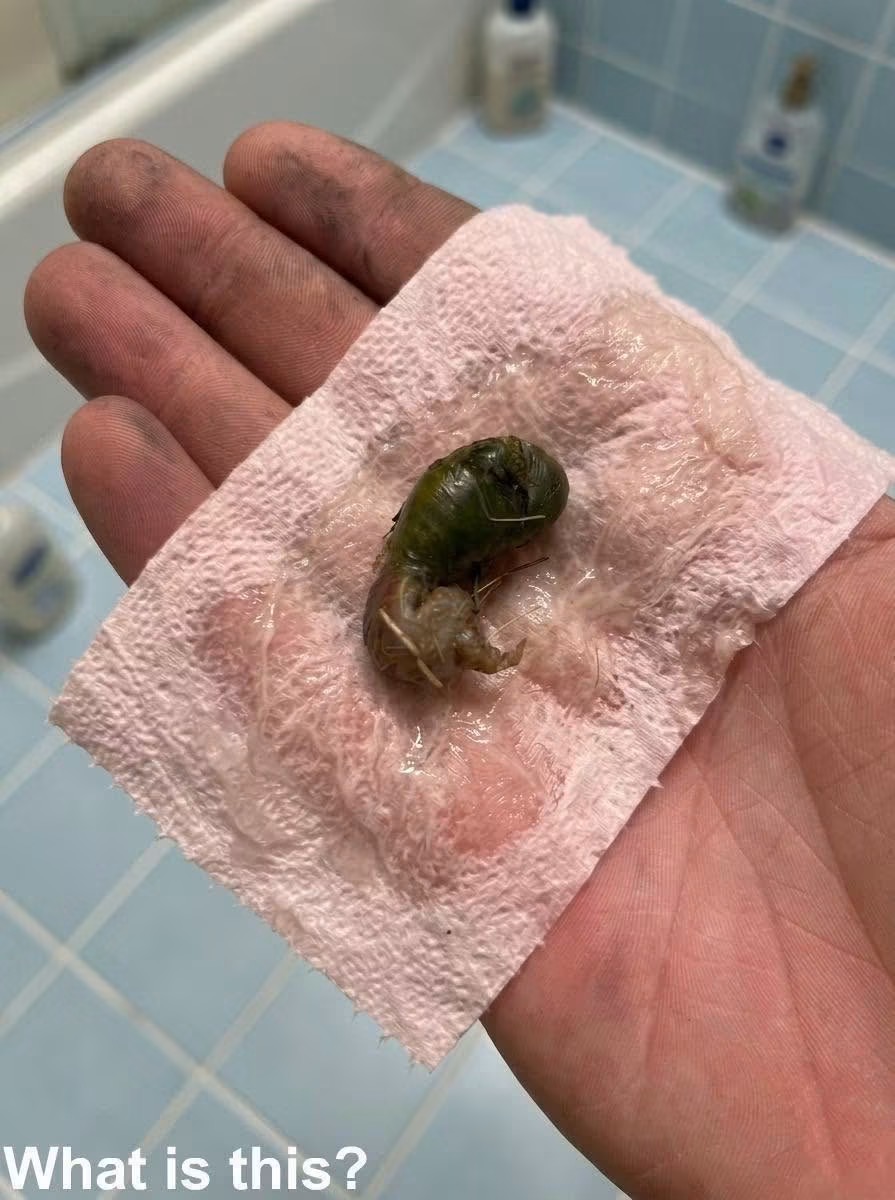
We found something strange on the bathroom floor, and my first reaction was fear. It was small, bright green, and unfamiliar enough that my mind immediately produced several alarming possibilities. My husband picked it up with a tissue while we stared at it and tried to decide what we were seeing.
The next morning, I sent a photograph to my sister with one question: What is this? She had no idea, which made the mystery feel more serious rather than less.
There is an old survival logic behind that habit. A person who assumed a rustle in the bushes might be a predator reacted faster than someone who confidently assumed it was the wind. Modern bathrooms contain fewer predators, but the alarm system remains.
The internet strengthens the pattern because unusual explanations are more interesting. A bath bead is boring. A strange creature or evidence of an infestation attracts attention and keeps people guessing.
The boring answer is often the correct one. Soap residue, insulation, expanding foam, food, toy pieces, mineral deposits, insect cases, and ordinary household products can all look mysterious when separated from their usual context.
That does not mean every unknown object should be handled casually. If something could be sharp, chemical, biological, or alive, avoid touching it directly. Keep children and pets away while you investigate.
Take clear photographs from several angles. Include an ordinary object for scale. Ask everyone in the household whether they recognize it and check nearby cabinets, packages, toys, drains, or repair materials.
Look for other signs. Repeated objects, droppings, damaged food, leaks, unusual odors, stains, or movement can point toward pests or a plumbing problem. A single object with no supporting evidence is more likely to have an ordinary explanation.
If the item appears dangerous or keeps returning, contact an appropriate professional. A pest expert, plumber, building manager, poison service, or local authority can assess risks that a social-media group cannot.
Disposal should match the uncertainty. Use gloves or a tool, wrap the object, and place it where children or animals cannot retrieve it. Do not smell, taste, crush, or burn an unidentified material.
In our case, no exterminator, plumber, or emergency move was necessary. The answer had been under the sink all along, resting inside the same mesh bag from which it had escaped.
The green bath bead became a family joke and a useful reminder. Not every mystery is a crisis, and not every unknown object is a threat. Curiosity works better when it begins with observation rather than panic.
The next time I find something strange at home, I will still be cautious. I will also ask the simplest questions first, check the obvious places, and speak to the people who share the house. Most importantly, I will ask the children before deciding that an alien has emerged from the bathroom drain.