Skip to content

Daily News

  • Home
  • Sample Page
  • Toggle search form

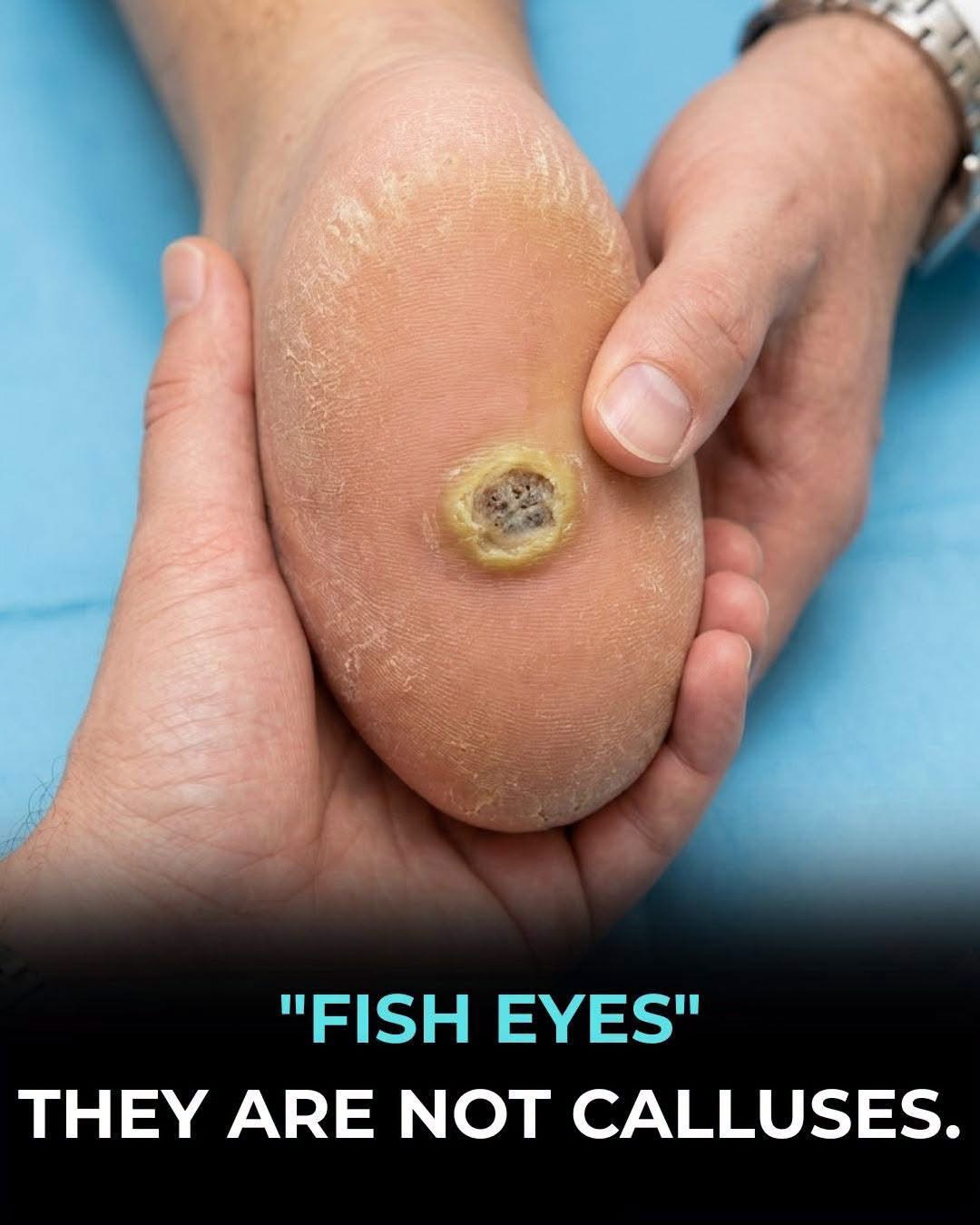
When you get a “plantar callus,” it’s not a common corn; it grows roots and… See more👇

Posted on November 5, 2026 By admin No Comments on When you get a “plantar callus,” it’s not a common corn; it grows roots and… See more👇

Small, rough, circular spots on the soles of the feet are often called “fish eyes” because of their appearance. They may look like ordinary calluses, especially when they develop on the heels or balls of the feet. However, these spots can actually be plantar warts, a common skin condition caused by a viral infection.

Plantar warts develop when certain types of human papillomavirus (HPV) enter the skin through tiny cuts or weakened areas. The virus causes skin cells to grow abnormally, creating a thickened, rough lesion. Because these warts form on weight-bearing areas, pressure from standing and walking can push them inward.

Despite the common belief that plantar warts have roots, they do not grow roots like plants. Instead, the infected tissue extends into the skin, sometimes making the wart difficult to treat. Small black dots may also appear inside the lesion. These are tiny blood vessels containing clotted blood, not seeds or roots.

Although plantar warts and calluses can look similar, there are some differences. Calluses generally develop from repeated friction or pressure, and normal skin lines often continue across them. Plantar warts may interrupt these lines and contain black dots. They can also hurt when squeezed from the sides or when pressure is applied while walking.

Anyone can develop plantar warts, but they are particularly common among children, teenagers, athletes, and people with weakened immune systems. The virus can spread through contaminated surfaces, especially in warm, moist environments such as public showers, swimming-pool areas, and gym changing rooms. Walking barefoot in these places can increase the risk of infection.

Plantar warts often develop gradually, sometimes appearing weeks or months after exposure. Some remain small, while others multiply into clusters known as mosaic warts. Because they occur on the soles of the feet, they can cause discomfort that feels like stepping on a small stone, particularly after prolonged standing or walking.

Fortunately, plantar warts are usually harmless, and some disappear naturally as the immune system fights the infection. Others may persist for months or years. Treatment options include over-the-counter salicylic acid products and professional cryotherapy, which freezes the affected tissue. Persistent cases may require additional treatments recommended by a healthcare professional.

Prevention involves keeping feet clean and dry, wearing sandals in public showers, avoiding shared towels and footwear, and not picking or cutting suspected warts. If a spot is painful, spreading, bleeding, or difficult to identify, consult a healthcare professional before attempting treatment, particularly if you have diabetes, poor circulation, or reduced sensation in your feet.

Ultimately, a small “fish eye” on the sole may be more than a simple callus. Recognizing the differences between these conditions can help you choose appropriate care, relieve discomfort, and reduce the risk of spreading a possible infection.

Uncategorized

Post navigation

Previous Post: 2 types of fish contain a lot of collagen 🐟🐟🐟
Next Post: I married a 70-year-old hospice patient to fulfill her last wish — after the funeral, her lawyer stepped aside with me and whispered, “I need you to see something. She didn’t choose you by accident.” I started volunteering at the local hospice a few years ago. That’s where I met Eleanor. She was 70 years old. While her illness was terminal, she still had days where her bright spirit completely outshined her diagnosis. For weeks, I sat with her, reading and listening to her stories. She had lived her entire life completely alone. No husband, no children, no family to speak of. One afternoon, she made a heartbreaking confession. She told me her one lifelong regret was never experiencing what it felt like to be a bride. She just wanted to wear a wedding dress and know what it meant to be chosen, even just once, before her time was up. By then, Eleanor had become one of the people I cared about most at the hospice. So, I found a simple, beautiful white gown. I arranged for a chaplain to come to the hospice. On the day of our wedding, Eleanor had a rare burst of energy. She was actually able to stand right beside me, radiating pure joy, as she proudly held up her hand to the camera to show off her ring. For that one afternoon, she wasn’t a patient. She was just a beautiful, happy bride. Eleanor passed away peacefully a few weeks later. Her funeral was incredibly quiet. It was just me and a few of the nurses standing by the graveside under a heavy gray sky. As the nurses made their way to their cars, a man in a sharp, dark suit approached me. He introduced himself as Eleanor’s lawyer. He politely offered his condolences for my loss, but his manner quickly shifted. He checked to make sure we were completely alone, then drew a thick, sealed envelope from his leather briefcase. “I need you to see something,” he whispered, handing it to me. “She didn’t choose you by accident.” — What was inside that envelope — and why did Eleanor choose *this* person?

Leave a Reply Cancel reply

Your email address will not be published. Required fields are marked *

Recent Posts

  • $95,000 5 beds, 6 baths…See more
  • 8 Signs That Two Souls Are Connected, No Matter The Distance
  • If your veins are visible in your hand, it is a signal of ca…See more
  • My mother-in-law recently pαssed away While going through her things in the dresser, we came across this. My husband and I have been staring at it for a long time, trying to figure out what it is. Does anybody know? See the first comment for the answer 👇
  • I married a 70-year-old hospice patient to fulfill her last wish — after the funeral, her lawyer stepped aside with me and whispered, “I need you to see something. She didn’t choose you by accident.” I started volunteering at the local hospice a few years ago. That’s where I met Eleanor. She was 70 years old. While her illness was terminal, she still had days where her bright spirit completely outshined her diagnosis. For weeks, I sat with her, reading and listening to her stories. She had lived her entire life completely alone. No husband, no children, no family to speak of. One afternoon, she made a heartbreaking confession. She told me her one lifelong regret was never experiencing what it felt like to be a bride. She just wanted to wear a wedding dress and know what it meant to be chosen, even just once, before her time was up. By then, Eleanor had become one of the people I cared about most at the hospice. So, I found a simple, beautiful white gown. I arranged for a chaplain to come to the hospice. On the day of our wedding, Eleanor had a rare burst of energy. She was actually able to stand right beside me, radiating pure joy, as she proudly held up her hand to the camera to show off her ring. For that one afternoon, she wasn’t a patient. She was just a beautiful, happy bride. Eleanor passed away peacefully a few weeks later. Her funeral was incredibly quiet. It was just me and a few of the nurses standing by the graveside under a heavy gray sky. As the nurses made their way to their cars, a man in a sharp, dark suit approached me. He introduced himself as Eleanor’s lawyer. He politely offered his condolences for my loss, but his manner quickly shifted. He checked to make sure we were completely alone, then drew a thick, sealed envelope from his leather briefcase. “I need you to see something,” he whispered, handing it to me. “She didn’t choose you by accident.” — What was inside that envelope — and why did Eleanor choose *this* person?

Recent Comments

No comments to show.

Copyright © 2026 Daily News.

Powered by PressBook WordPress theme